Nectar & Roast
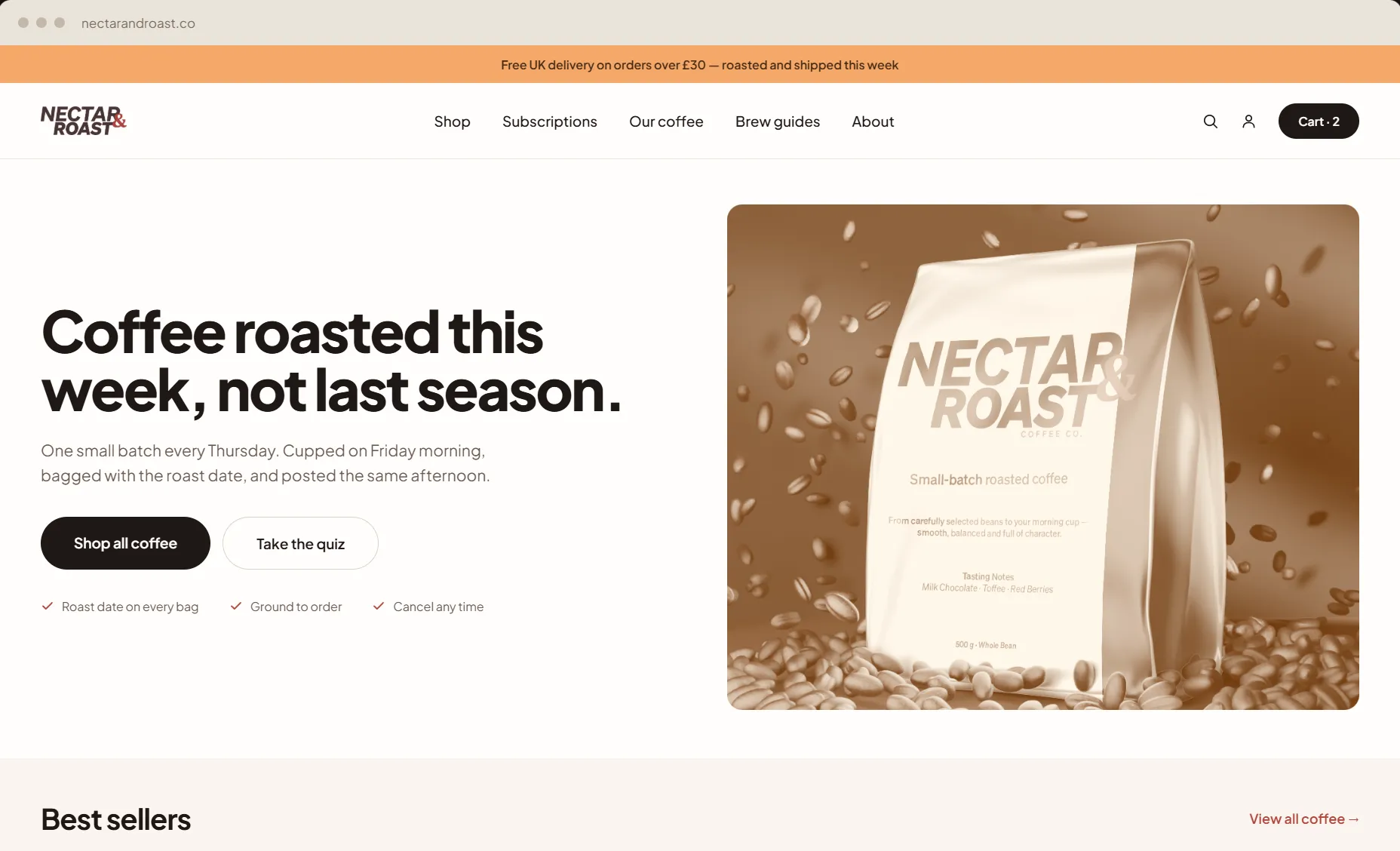
Coffee roasted this week, not last season.
One small batch every Thursday. Cupped on Friday morning, bagged with the roast date, and posted the same afternoon. The date is on the bag because it is the only number in speciality coffee that a buyer can actually check.
Which decides the rest of it. If freshness is the claim, the site has to make the claim falsifiable: the roast date on every listing, the batch it came from, and a delivery bar that says which week you are buying. Nothing here asks to be trusted — it just shows the date and lets you decide.
Roast date on every bag. Ground to order. Cancel any time.
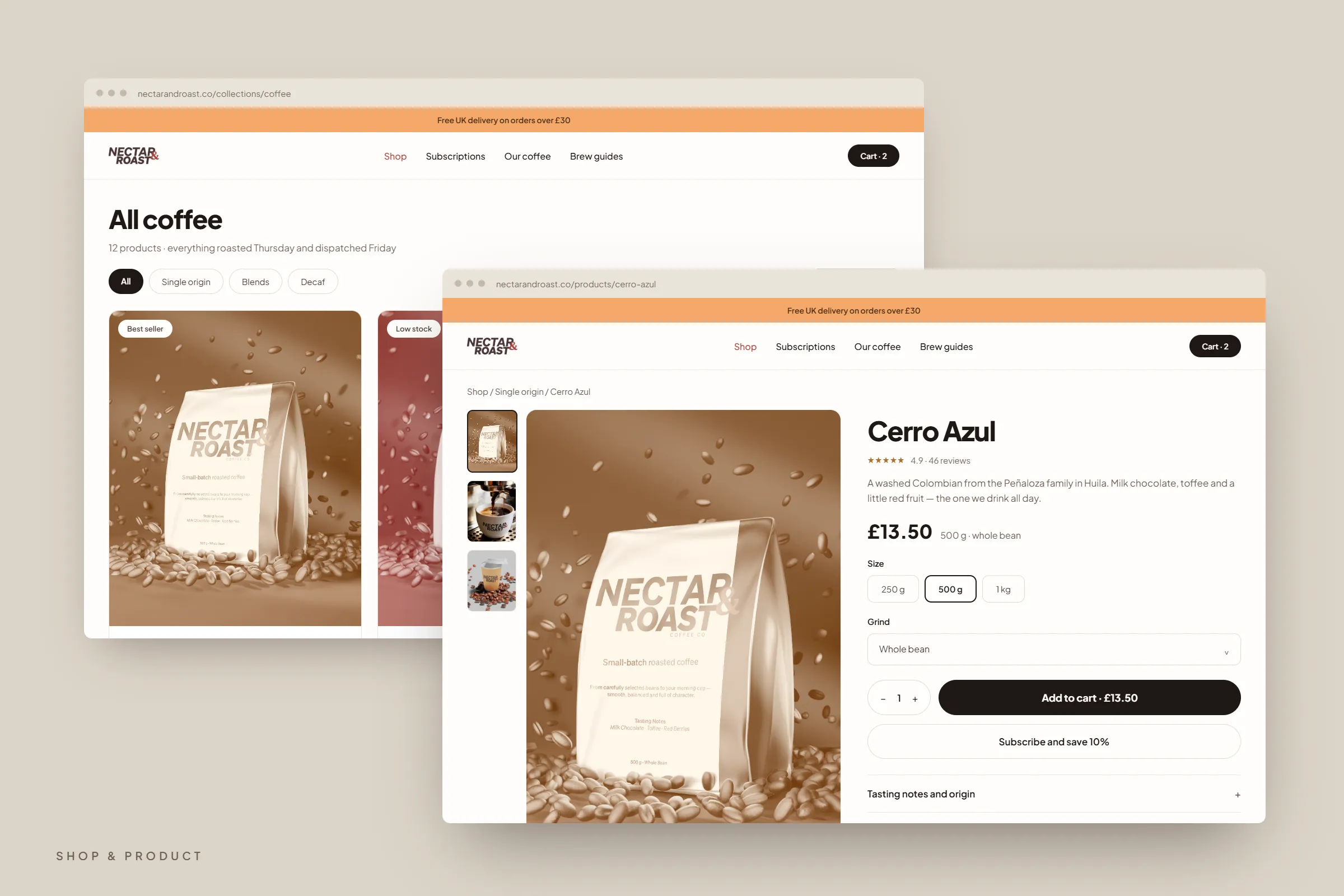
Twelve coffees, filtered by single origin, blend or decaf, and every one of them carrying the same three facts — origin, tasting notes, roast date. The subscribe option sits under the buy button rather than in a banner across the top.
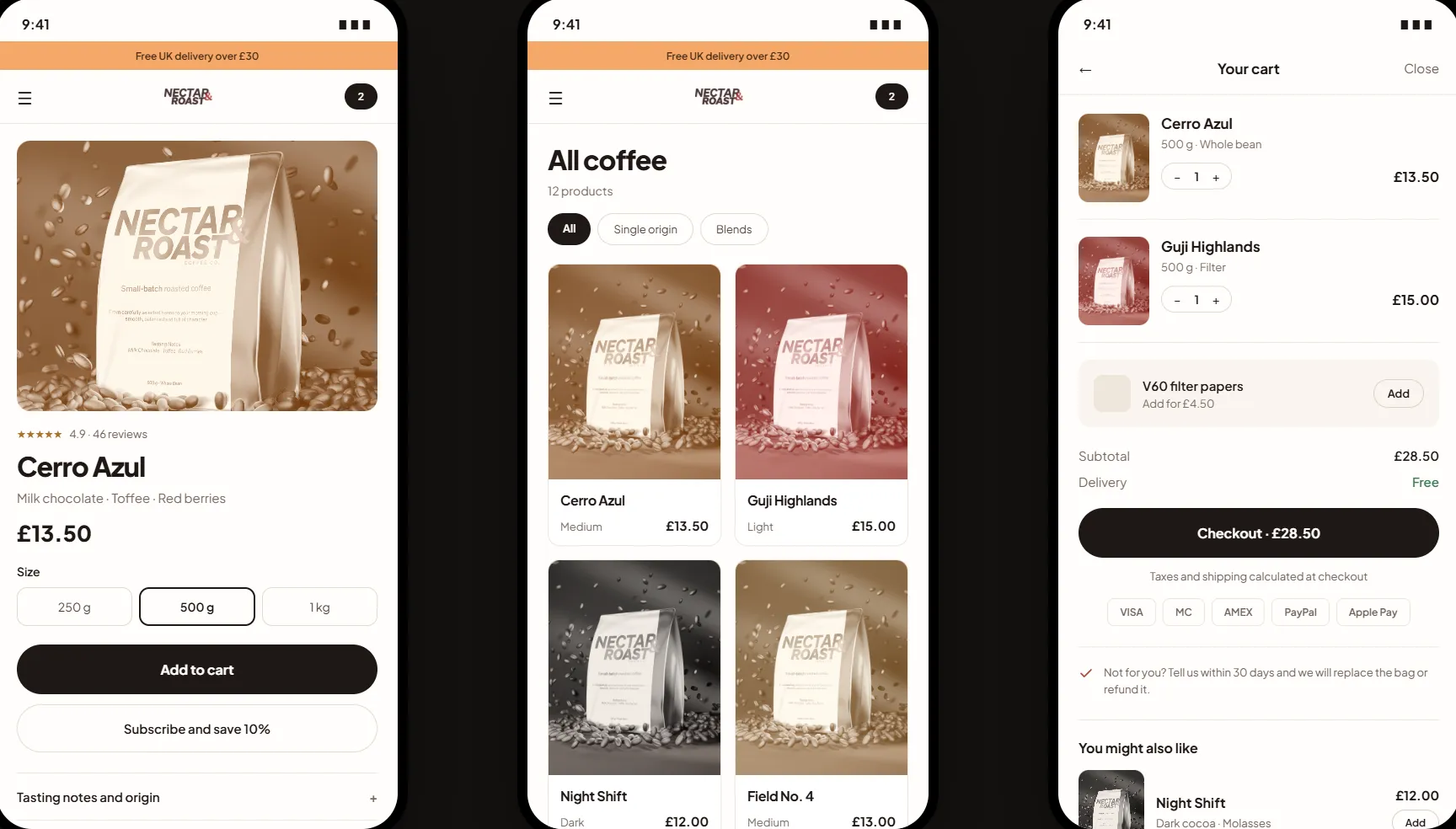
Most coffee is reordered from a kitchen, one-handed, while the kettle boils. The phone build is the one that had to be quickest, so the repeat order is two taps from the home screen.
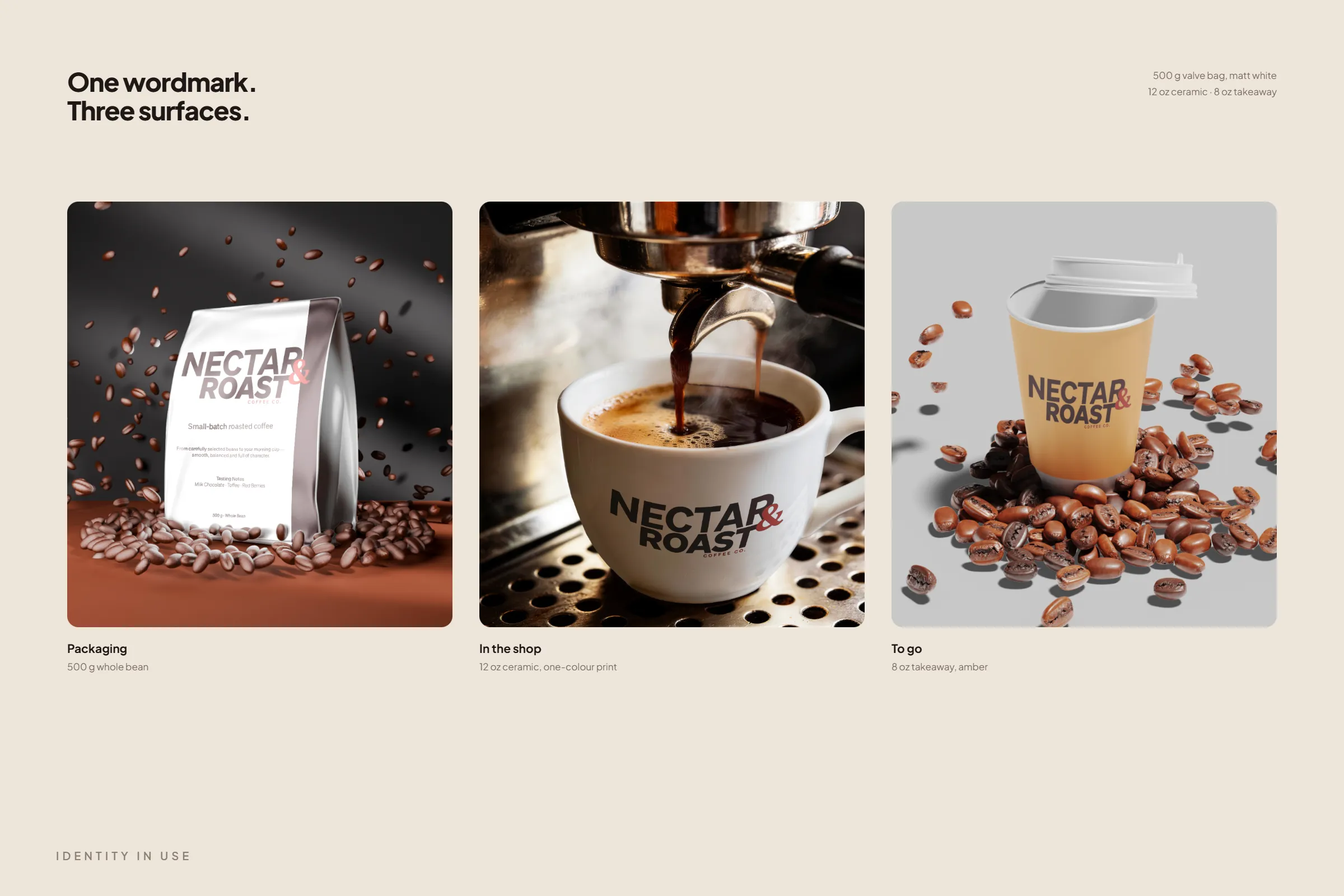
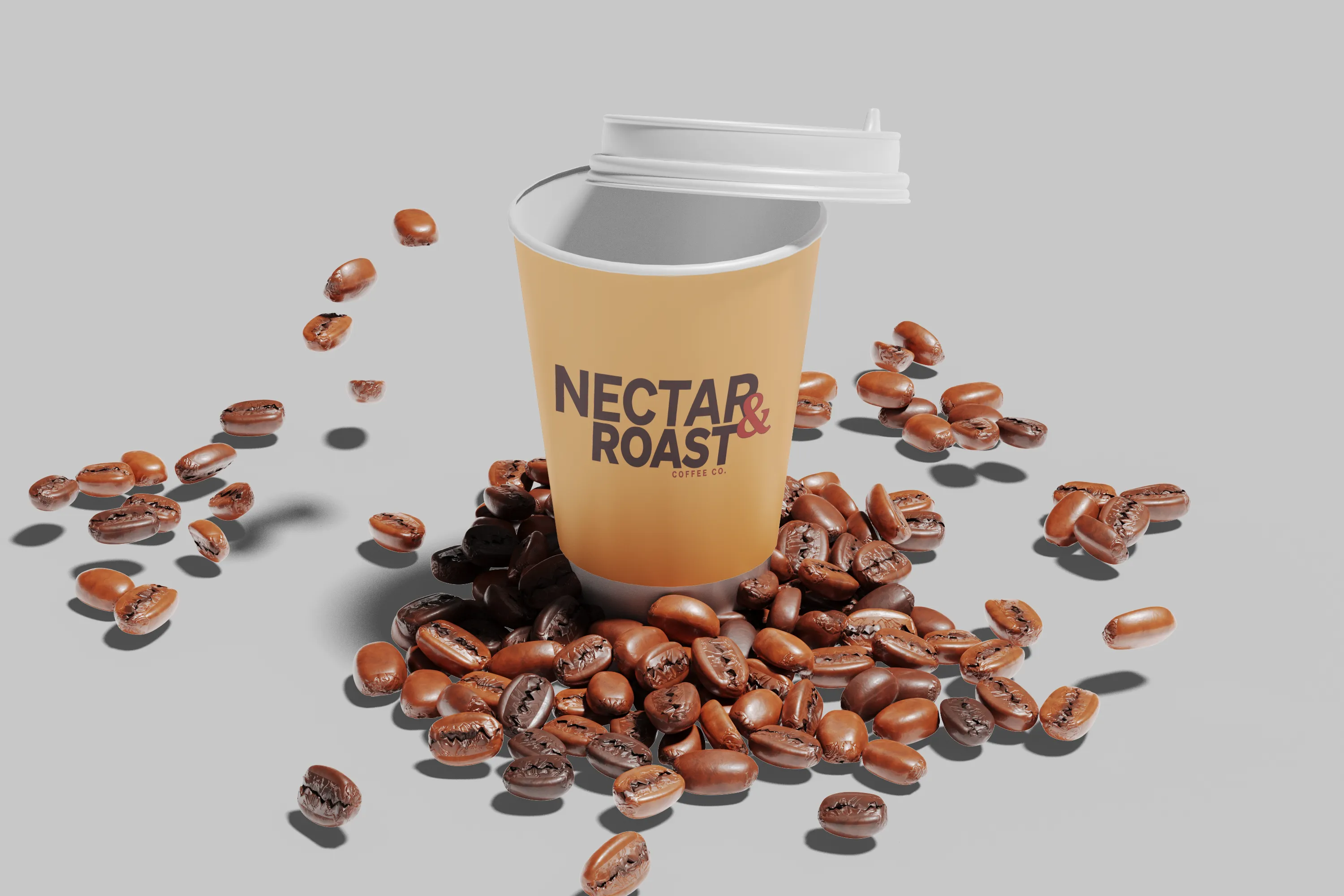
One wordmark, three surfaces. A matt white bag, a ceramic cup in the shop, and amber to take away.
The wordmark is the only thing that carries across all three, printed in one colour each time. A bag has to survive a valve, a heat seal and a courier; a cup has to survive a dishwasher. Anything that needed two colours or a gradient to work was cut before it reached a supplier.
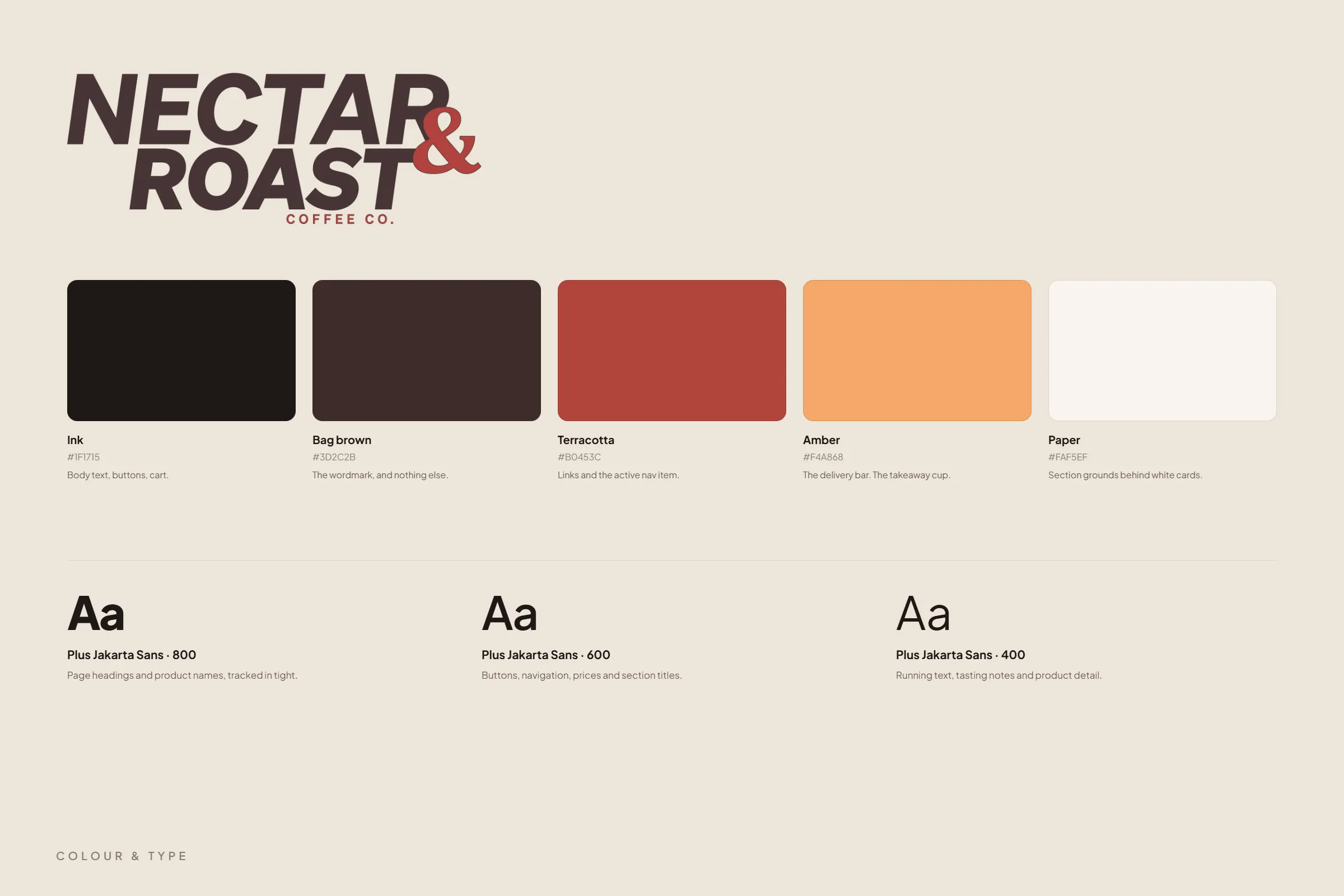
Speciality coffee is sold on adjectives — smooth, balanced, full of character — which every roaster on the shelf is also using. The one thing a buyer can verify is when it was roasted, so the whole brand is built to put that date in front of them and get out of the way.